Introduction to Sodium Silicate: A Multifunctional Not Natural Substance Driving Modern Sector
Salt silicate, frequently called water glass or soluble glass, is a flexible not natural compound composed of salt oxide (Na ₂ O) and silicon dioxide (SiO ₂) in varying proportions. Known for its sticky homes, thermal security, and chemical resistance, sodium silicate plays an essential duty throughout sectors– from construction and foundry job to cleaning agent solution and environmental removal. As international need for lasting materials expands, sodium silicate has actually re-emerged as a key player in green chemistry, supplying low-cost, safe, and high-performance solutions for modern design difficulties.

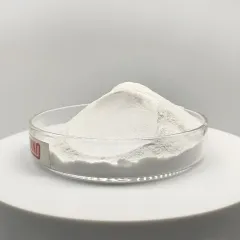
(Sodium Silicate Powder)
Chemical Framework and Variants: Comprehending the Foundation of Efficiency
Salt silicates exist in various forms, primarily identified by their SiO TWO: Na two O molar proportion, which considerably affects solubility, thickness, and application suitability. Common types consist of fluid salt silicate solutions (e.g., sodium metasilicate and salt orthosilicate), strong kinds made use of in detergents, and colloidal dispersions tailored for specialty finishes. The anionic silicate network offers binding capacities, pH buffering, and surface-reactive habits that underpin its extensive energy. Current developments in nanoparticle synthesis have additional increased its capacity, making it possible for precision-tuned formulations for sophisticated materials scientific research applications.
Duty in Building And Construction and Cementitious Solutions: Enhancing Resilience and Sustainability
In the building and construction industry, salt silicate functions as an important additive for concrete, grouting substances, and dirt stablizing. When used as a surface hardener or permeating sealant, it reacts with calcium hydroxide in cement to create calcium silicate hydrate (C-S-H), improving toughness, abrasion resistance, and dampness security. It is also used in fireproofing materials as a result of its ability to develop a protective ceramic layer at high temperatures. With expanding focus on carbon-neutral building techniques, salt silicate-based geopolymer binders are getting grip as alternatives to Rose city cement, substantially lowering carbon monoxide ₂ discharges while preserving architectural honesty.
Applications in Factory and Steel Casting: Accuracy Bonding in High-Temperature Environments
The foundry market depends greatly on salt silicate as a binder for sand mold and mildews and cores as a result of its superb refractoriness, dimensional stability, and simplicity of use. Unlike organic binders, salt silicate-based systems do not emit harmful fumes throughout spreading, making them environmentally more suitable. However, traditional carbon monoxide TWO-hardening techniques can result in mold brittleness, triggering technology in hybrid healing strategies such as microwave-assisted drying and dual-binder systems that incorporate salt silicate with organic polymers for better efficiency and recyclability. These growths are improving modern-day metalcasting toward cleaner, a lot more reliable manufacturing.
Use in Cleaning Agents and Cleaning Professionals: Replacing Phosphates in Eco-Friendly Formulations
Historically, salt silicate was a core element of powdered laundry cleaning agents, functioning as a builder, alkalinity source, and corrosion prevention for cleaning machine elements. With enhancing limitations on phosphate-based ingredients because of eutrophication issues, salt silicate has actually restored importance as a green alternative. Its capability to soften water, stabilize enzymes, and protect against dirt redeposition makes it indispensable in both home and commercial cleaning items. Developments in microencapsulation and controlled-release layouts are additional expanding its performance in concentrated and single-dose cleaning agent systems.
Environmental Removal and CO ₂ Sequestration: An Eco-friendly Chemistry Perspective
Past industrial applications, salt silicate is being checked out for ecological remediation, specifically in heavy metal immobilization and carbon capture innovations. In polluted soils, it aids maintain metals like lead and arsenic via mineral precipitation and surface complexation. In carbon capture and storage space (CCS) systems, salt silicate services respond with carbon monoxide ₂ to form secure carbonate minerals, supplying an appealing path for long-term carbon sequestration. Scientists are likewise examining its combination right into straight air capture (DAC) units, where its high alkalinity and low regeneration power needs can lower the price and complexity of climatic carbon monoxide ₂ elimination.
Arising Functions in Nanotechnology and Smart Materials Development
(Sodium Silicate Powder)
Recent innovations in nanotechnology have unlocked new frontiers for sodium silicate in clever products and useful compounds. Nanostructured silicate movies show enhanced mechanical toughness, optical openness, and antimicrobial residential properties, making them appropriate for biomedical tools, anti-fogging layers, and self-cleaning surfaces. Furthermore, sodium silicate-derived matrices are being made use of as layouts for manufacturing mesoporous silica nanoparticles with tunable pore dimensions– optimal for medication shipment, catalysis, and picking up applications. These innovations highlight its progressing role past traditional markets right into state-of-the-art, value-added domain names.
Challenges and Limitations in Practical Application
Despite its versatility, salt silicate deals with numerous technical and economic challenges. Its high alkalinity can present handling and compatibility issues, particularly in admixture systems including acidic or sensitive elements. Gelation and viscosity instability in time can make complex storage space and application processes. In addition, while sodium silicate is typically non-toxic, long term exposure might trigger skin irritability or respiratory pain, demanding correct safety and security methods. Resolving these limitations needs ongoing study right into changed formulas, encapsulation methods, and maximized application methodologies to enhance use and broaden fostering.
Future Overview: Combination with Digital Production and Circular Economy Designs
Looking ahead, salt silicate is poised to play a transformative duty in next-generation production and sustainability efforts. Assimilation with electronic manufacture strategies such as 3D printing and robotic dispensing will certainly allow specific, on-demand product deployment in building and construction and composite design. At the same time, circular economic climate principles are driving efforts to recuperate and repurpose salt silicate from hazardous waste streams, consisting of fly ash and blast heater slag. As sectors seek greener, smarter, and a lot more resource-efficient paths, salt silicate attracts attention as a foundational chemical with withstanding importance and broadening perspectives.
Provider
TRUNNANO is a supplier of boron nitride with over 12 years of experience in nano-building energy conservation and nanotechnology development. It accepts payment via Credit Card, T/T, West Union and Paypal. Trunnano will ship the goods to customers overseas through FedEx, DHL, by air, or by sea. If you want to know more about Sodium Silicate, please feel free to contact us and send an inquiry(sales5@nanotrun.com).
Tags: sodium silicate,sodium silicate water glass,sodium silicate liquid glass
All articles and pictures are from the Internet. If there are any copyright issues, please contact us in time to delete.
Inquiry us