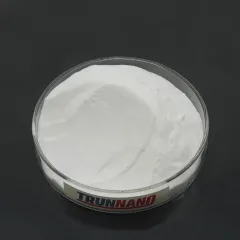
Intro to Hollow Glass Microspheres
Hollow glass microspheres (HGMs) are hollow, spherical bits commonly fabricated from silica-based or borosilicate glass products, with sizes usually varying from 10 to 300 micrometers. These microstructures show a special combination of reduced density, high mechanical toughness, thermal insulation, and chemical resistance, making them highly flexible throughout multiple industrial and scientific domains. Their manufacturing entails specific engineering strategies that allow control over morphology, covering thickness, and internal gap quantity, making it possible for tailored applications in aerospace, biomedical design, power systems, and a lot more. This article provides an extensive review of the major approaches utilized for manufacturing hollow glass microspheres and highlights 5 groundbreaking applications that emphasize their transformative capacity in modern technical developments.

(Hollow glass microspheres)
Production Techniques of Hollow Glass Microspheres
The construction of hollow glass microspheres can be extensively classified into three main techniques: sol-gel synthesis, spray drying, and emulsion-templating. Each strategy supplies distinct advantages in terms of scalability, particle harmony, and compositional adaptability, permitting personalization based upon end-use needs.
The sol-gel procedure is among one of the most commonly utilized techniques for producing hollow microspheres with specifically managed design. In this approach, a sacrificial core– often made up of polymer beads or gas bubbles– is covered with a silica forerunner gel through hydrolysis and condensation reactions. Subsequent heat therapy eliminates the core product while densifying the glass shell, causing a robust hollow framework. This strategy enables fine-tuning of porosity, wall density, and surface chemistry but usually needs intricate reaction kinetics and expanded handling times.
An industrially scalable option is the spray drying method, which involves atomizing a fluid feedstock consisting of glass-forming precursors into great droplets, followed by quick dissipation and thermal decomposition within a warmed chamber. By incorporating blowing agents or frothing substances into the feedstock, internal spaces can be produced, resulting in the development of hollow microspheres. Although this approach enables high-volume production, attaining regular covering thicknesses and reducing defects stay recurring technical challenges.
A 3rd encouraging method is emulsion templating, where monodisperse water-in-oil solutions serve as templates for the formation of hollow frameworks. Silica precursors are concentrated at the interface of the solution beads, forming a slim covering around the aqueous core. Adhering to calcination or solvent extraction, distinct hollow microspheres are gotten. This approach masters creating particles with slim size circulations and tunable performances but demands mindful optimization of surfactant systems and interfacial conditions.
Each of these manufacturing techniques adds distinctly to the design and application of hollow glass microspheres, providing designers and researchers the devices essential to customize residential properties for sophisticated useful products.
Magical Usage 1: Lightweight Structural Composites in Aerospace Engineering
Among one of the most impactful applications of hollow glass microspheres depends on their use as reinforcing fillers in lightweight composite materials developed for aerospace applications. When included right into polymer matrices such as epoxy materials or polyurethanes, HGMs substantially reduce general weight while keeping structural integrity under severe mechanical loads. This particular is specifically beneficial in aircraft panels, rocket fairings, and satellite elements, where mass effectiveness directly affects gas usage and payload capability.
Furthermore, the spherical geometry of HGMs boosts tension circulation throughout the matrix, thereby enhancing exhaustion resistance and influence absorption. Advanced syntactic foams containing hollow glass microspheres have demonstrated remarkable mechanical performance in both static and vibrant filling problems, making them perfect candidates for usage in spacecraft thermal barrier and submarine buoyancy modules. Recurring study remains to discover hybrid composites integrating carbon nanotubes or graphene layers with HGMs to additionally improve mechanical and thermal properties.
Magical Use 2: Thermal Insulation in Cryogenic Storage Space Equipment
Hollow glass microspheres have inherently reduced thermal conductivity because of the existence of a confined air dental caries and marginal convective warm transfer. This makes them remarkably effective as insulating representatives in cryogenic atmospheres such as fluid hydrogen containers, liquefied natural gas (LNG) containers, and superconducting magnets made use of in magnetic vibration imaging (MRI) machines.
When embedded right into vacuum-insulated panels or applied as aerogel-based coverings, HGMs work as efficient thermal barriers by minimizing radiative, conductive, and convective heat transfer devices. Surface area alterations, such as silane treatments or nanoporous coverings, even more enhance hydrophobicity and avoid moisture access, which is important for preserving insulation efficiency at ultra-low temperature levels. The combination of HGMs into next-generation cryogenic insulation products represents a key development in energy-efficient storage and transport services for clean fuels and room exploration innovations.
Enchanting Use 3: Targeted Drug Delivery and Clinical Imaging Comparison Brokers
In the area of biomedicine, hollow glass microspheres have actually become appealing platforms for targeted medication delivery and diagnostic imaging. Functionalized HGMs can encapsulate healing agents within their hollow cores and launch them in action to exterior stimulations such as ultrasound, electromagnetic fields, or pH adjustments. This capacity allows localized therapy of illness like cancer cells, where precision and reduced systemic poisoning are important.
In addition, HGMs can be doped with contrast-enhancing components such as gadolinium, iodine, or fluorescent dyes to act as multimodal imaging agents compatible with MRI, CT scans, and optical imaging methods. Their biocompatibility and capability to bring both healing and diagnostic features make them eye-catching prospects for theranostic applications– where diagnosis and therapy are combined within a solitary platform. Study initiatives are additionally checking out naturally degradable versions of HGMs to expand their energy in regenerative medication and implantable tools.
Magical Usage 4: Radiation Protecting in Spacecraft and Nuclear Facilities
Radiation securing is a vital problem in deep-space missions and nuclear power centers, where direct exposure to gamma rays and neutron radiation presents considerable threats. Hollow glass microspheres doped with high atomic number (Z) components such as lead, tungsten, or barium use a novel solution by offering effective radiation attenuation without adding extreme mass.
By installing these microspheres right into polymer compounds or ceramic matrices, scientists have established adaptable, lightweight securing materials appropriate for astronaut fits, lunar environments, and activator containment frameworks. Unlike typical protecting products like lead or concrete, HGM-based compounds preserve structural integrity while offering boosted mobility and convenience of manufacture. Proceeded advancements in doping methods and composite design are anticipated to further optimize the radiation security capacities of these products for future room expedition and terrestrial nuclear safety and security applications.
( Hollow glass microspheres)
Enchanting Use 5: Smart Coatings and Self-Healing Materials
Hollow glass microspheres have reinvented the advancement of wise layers with the ability of independent self-repair. These microspheres can be packed with healing agents such as rust inhibitors, materials, or antimicrobial compounds. Upon mechanical damage, the microspheres rupture, releasing the encapsulated materials to secure cracks and restore finishing integrity.
This innovation has actually found practical applications in aquatic finishings, vehicle paints, and aerospace elements, where lasting longevity under severe ecological conditions is vital. Furthermore, phase-change products encapsulated within HGMs make it possible for temperature-regulating coatings that give easy thermal monitoring in buildings, electronics, and wearable devices. As research proceeds, the combination of receptive polymers and multi-functional additives right into HGM-based coatings assures to unlock brand-new generations of adaptive and smart material systems.
Conclusion
Hollow glass microspheres exhibit the convergence of sophisticated materials science and multifunctional engineering. Their varied manufacturing methods enable exact control over physical and chemical buildings, promoting their use in high-performance structural composites, thermal insulation, clinical diagnostics, radiation protection, and self-healing products. As developments continue to arise, the “enchanting” adaptability of hollow glass microspheres will unquestionably drive breakthroughs across industries, shaping the future of sustainable and intelligent product design.
Supplier
RBOSCHCO is a trusted global chemical material supplier & manufacturer with over 12 years experience in providing super high-quality chemicals and Nanomaterials. The company export to many countries, such as USA, Canada, Europe, UAE, South Africa,Tanzania,Kenya,Egypt,Nigeria,Cameroon,Uganda,Turkey,Mexico,Azerbaijan,Belgium,Cyprus,Czech Republic, Brazil, Chile, Argentina, Dubai, Japan, Korea, Vietnam, Thailand, Malaysia, Indonesia, Australia,Germany, France, Italy, Portugal etc. As a leading nanotechnology development manufacturer, RBOSCHCO dominates the market. Our professional work team provides perfect solutions to help improve the efficiency of various industries, create value, and easily cope with various challenges. If you are looking for hollow glass microspheres, please send an email to: sales1@rboschco.com
Tags: Hollow glass microspheres, Hollow glass microspheres
All articles and pictures are from the Internet. If there are any copyright issues, please contact us in time to delete.
Inquiry us